BLDC and PMSM motor and driver solutions for OEM equipment. AEP supports application-specific motor selection, drive matching, mechanical configuration, and sample-to-production coordination.
AEP helps OEM customers select brushless motor and electronic drive solutions for industrial equipment and electric mobility. From individual motors and controllers to matched configurations, we coordinate performance requirements, mechanical interfaces, and project-specific supply needs.
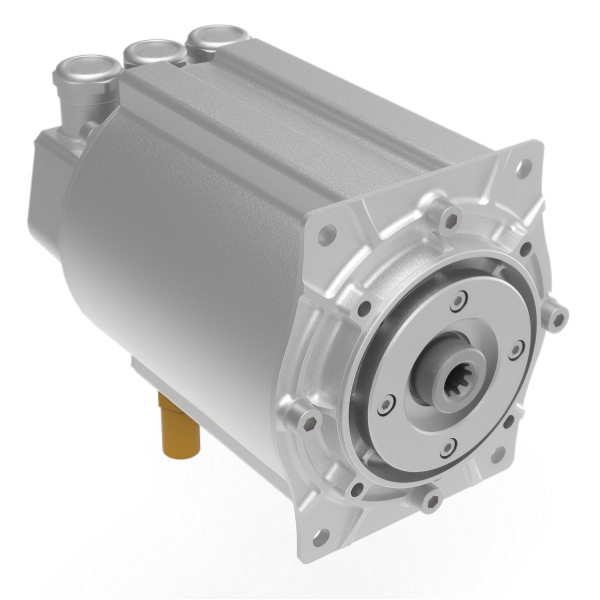
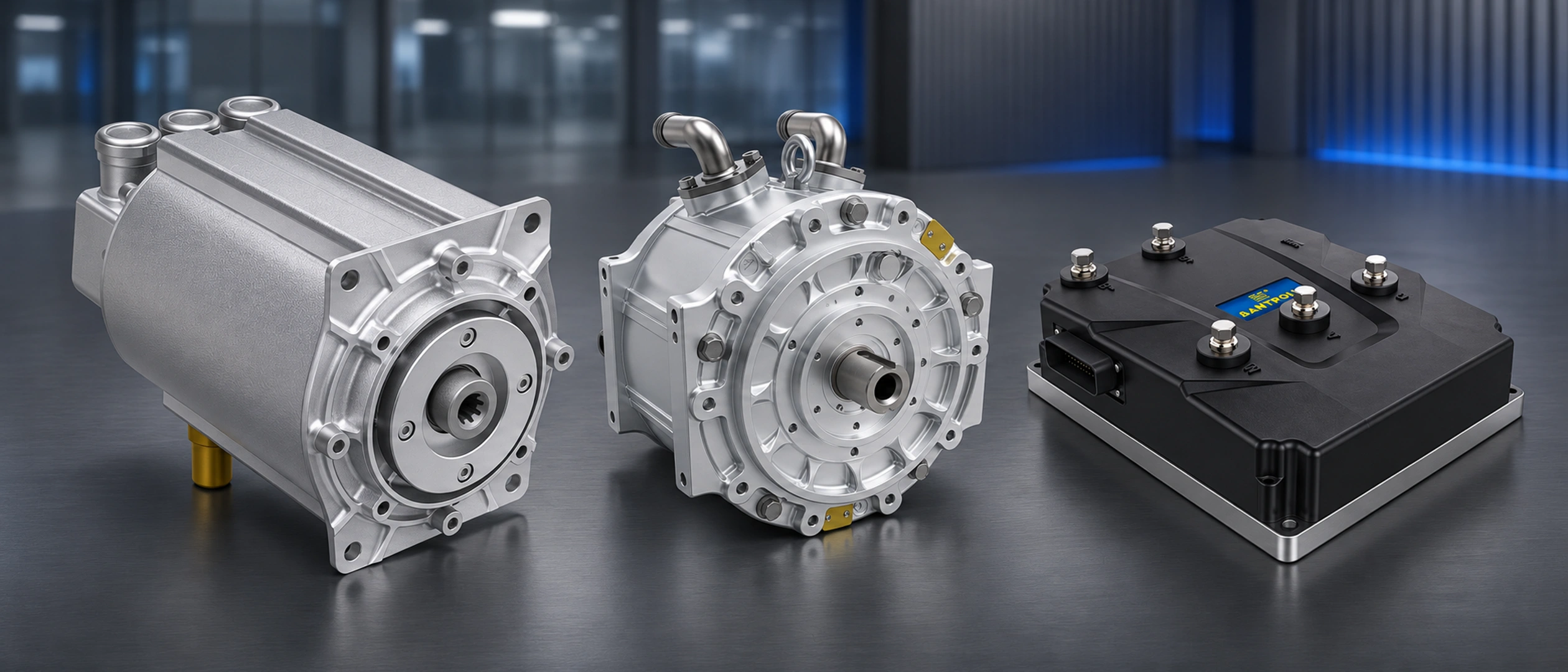
Representative motor and controller platforms. Final configuration is selected for your application.
MOTOR TECHNOLOGY
Winding Options That Fit the Project
Winding construction is one part of motor selection. The complete design, cooling method, operating point, and duty cycle determine application performance.
01
Round Wire
End-winding profileSlot cross-section
02
Flat Wire / Hairpin
End-winding profileSlot cross-section
Winding structure comparison Schematic only. Geometry and performance vary by motor design.
01
Round-Wire Winding
Flexible, established construction
Advantages
Mature winding processes and flexible conductor sizing. Adaptable to a wide range of motor configurations.
Trade-offs
Typically lower slot fill. End-winding space and heat transfer need attention in compact designs.
02
Flat-Wire / Hairpin Winding
Compact, high-fill architecture
Advantages
Higher slot fill and improved heat-transfer potential. Shorter end windings can support compact packaging and lower DC copper losses.
Trade-offs
More demanding forming, insulation, and joining processes. AC copper losses need attention at higher electrical frequencies.
BRUSHLESS MOTOR OPTIONS
Motors
Compare two common brushless motor and drive approaches: square-wave commutation for BLDC and sinusoidal current control for PMSM.
SQUARE-WAVE DRIVE
SQUARE-WAVE / SIX-STEP DRIVE
BLDC Motor
Typically paired with square-wave (six-step / trapezoidal) commutation for straightforward electronic speed control.
Advantages
Simpler commutation and control implementation.
Typically lower controller complexity and cost.
Practical for applications with moderate smoothness requirements.
Trade-offs
Commutation can produce more torque ripple and audible noise.
Less smooth low-speed operation than a well-tuned sinusoidal drive.
Match the controller to the motor, DC supply, feedback signals, and equipment control requirements.
MOBILE & INDUSTRIAL EQUIPMENT
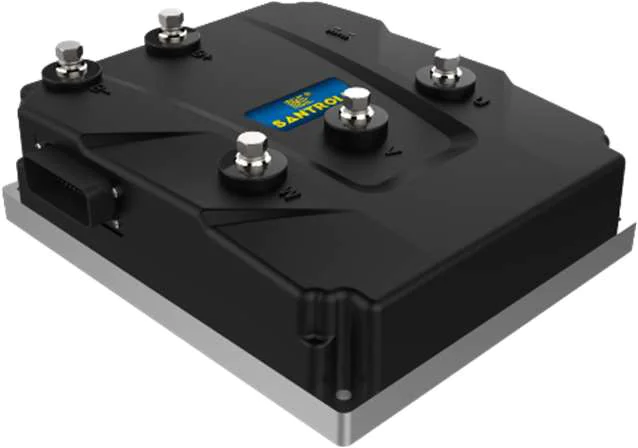
Low-Voltage Motor Controllers
Controller options for battery-powered equipment, material handling, and electric mobility. The SZ8XXX PMSM series lists 48–144 V DC operation, CAN communication, and IP67 protection; confirm the selected variant.
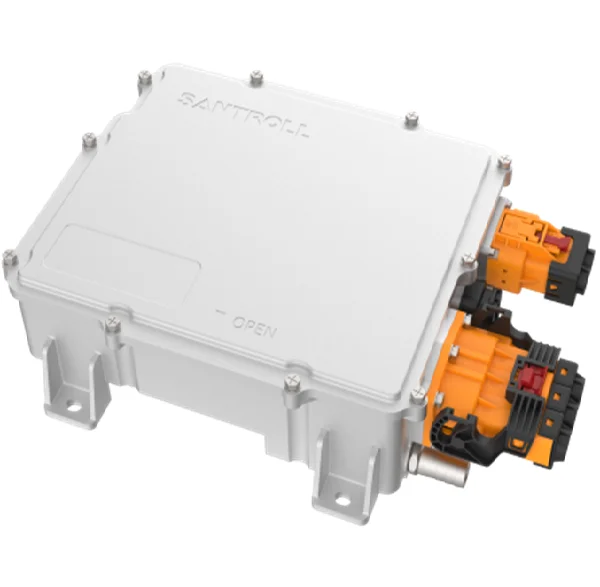
Inverter and SiC-based controller options for higher-voltage platforms. Bus voltage, continuous and peak current, cooling, and protection requirements are evaluated together.
Ratings and features vary by model. Motor–controller compatibility is confirmed during selection.
SENSORLESS MOTOR CONTROL
Sensorless FOC Algorithm
Explore rotor-position estimation approaches for field-oriented control without a mechanical position sensor.
SLIDING-MODE OBSERVER / SMO
Sliding Mode
Estimates back-EMF from measured currents and applied voltages to recover rotor position and speed.
Advantages
Robust estimation in the presence of disturbances and model uncertainty.
Established implementation path for real-time sensorless FOC.
Trade-offs
Switching action can cause chattering and estimation noise.
Filtering and gain tuning must balance noise rejection against phase delay.
PHASE-LOCKED LOOP ESTIMATOR
PLL
Tracks the phase of an estimated back-EMF or flux signal to obtain rotor angle and speed.
Advantages
Smooth angle and speed tracking with a correctly tuned loop.
Can work alongside sliding-mode or flux observers.
Trade-offs
Bandwidth tuning trades noise rejection against tracking response.
Weak signals or rapid transients can degrade tracking or cause loss of lock.
NONLINEAR FLUX OBSERVER
Non-linear Flux
Reconstructs motor flux from voltage and current signals, using nonlinear correction to estimate rotor angle.
Advantages
Direct flux-based angle estimation for compatible motor models.
Continuous correction avoids the switching action of a conventional SMO.
Trade-offs
Sensitive to parameter errors and voltage or current measurement offsets.
Observer gain and the motor model need application-specific validation.
PLL tracking can be combined with an observer rather than replacing it. These model-based approaches generally need a startup strategy at standstill or very low speed. The available algorithm and operating range depend on the selected controller, motor, and application.
PRODUCTS BY APPLICATION
Electric Drive Applications
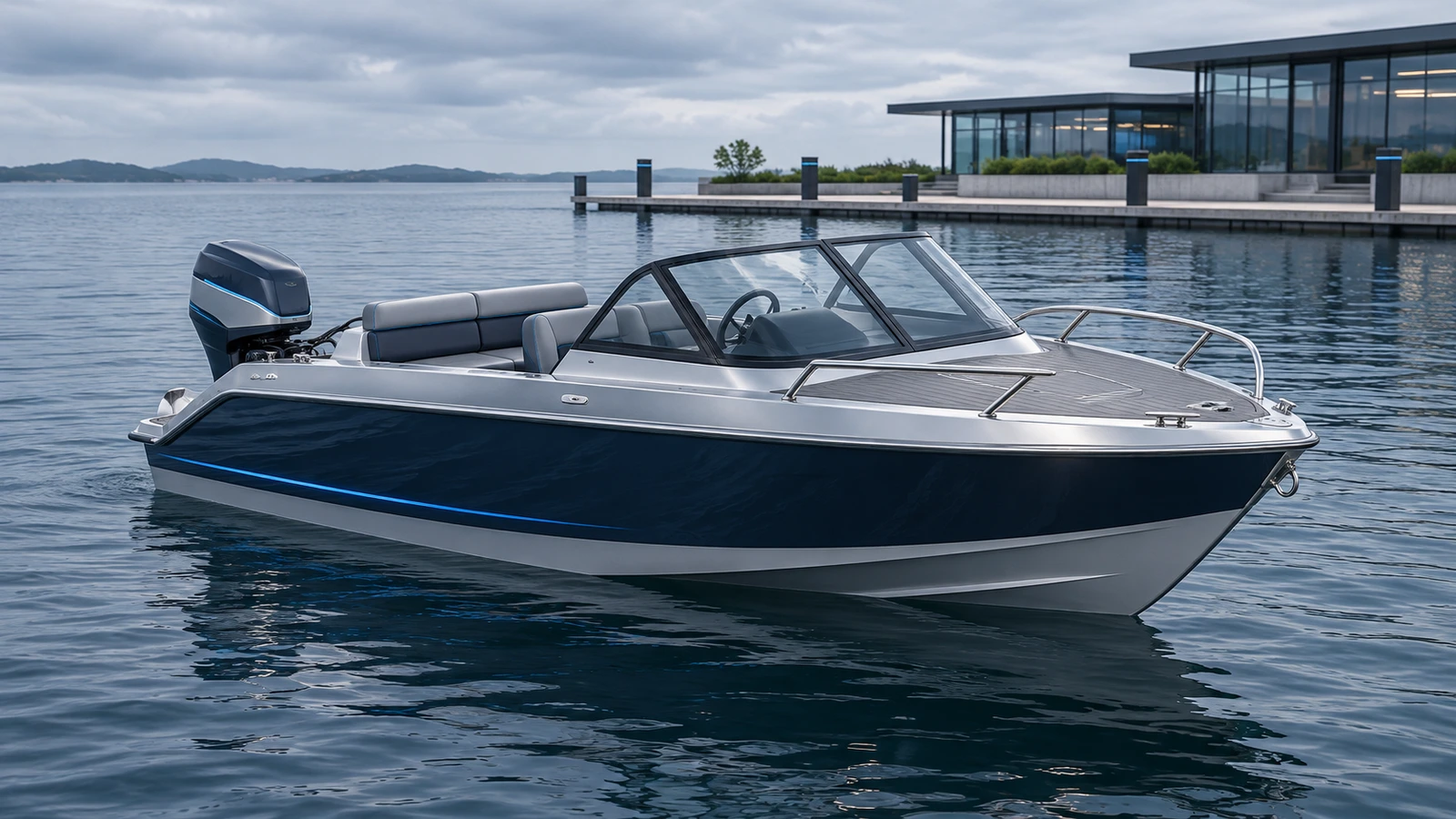
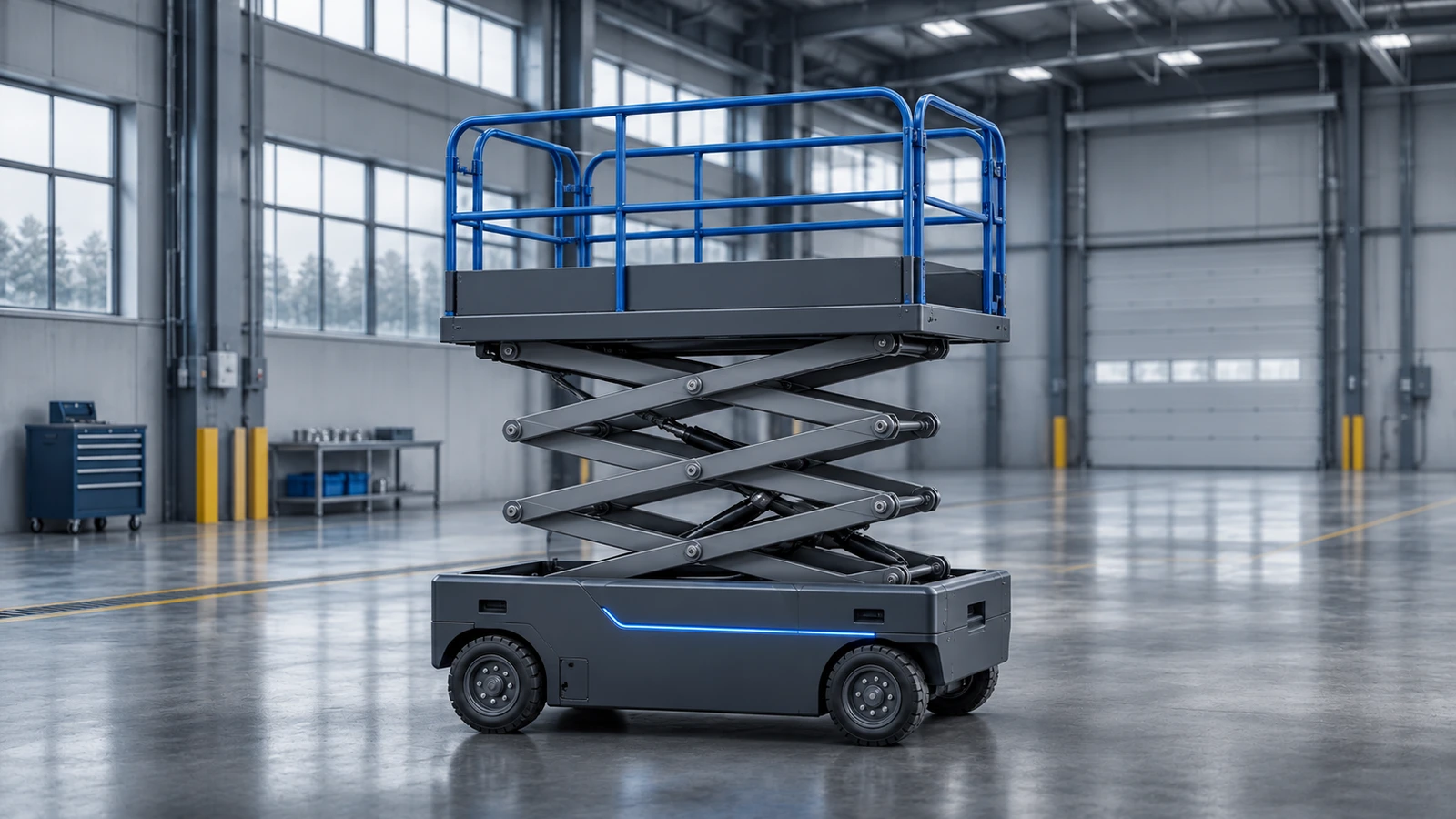
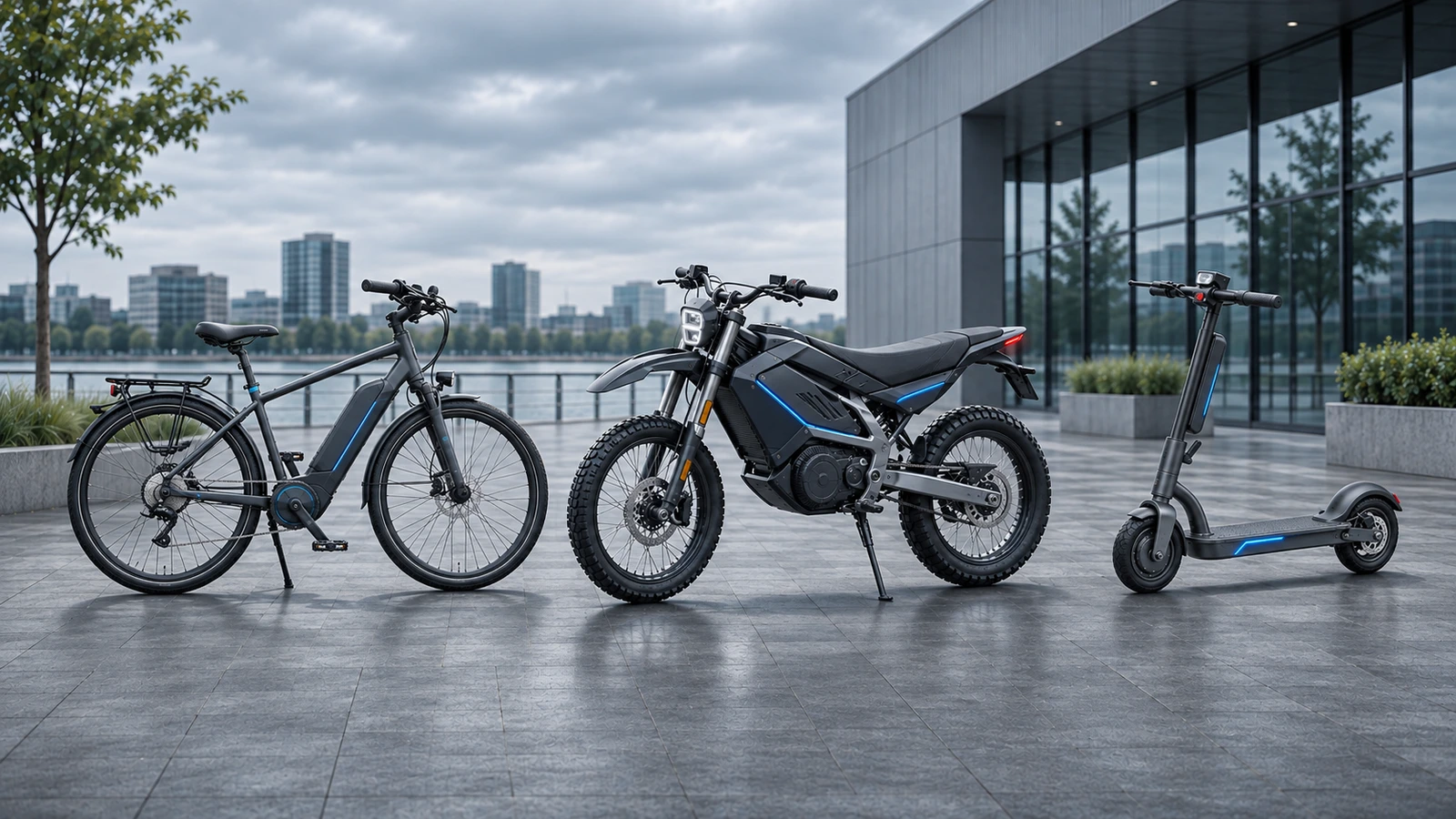
Explore motor and controller products for aviation, marine, industrial equipment, and electric two-wheelers.
From engineering support and prototyping to quality control and volume manufacturing, we help turn OEM projects into reliable, cost-effective solutions.
 American Electronic